
Recover Crypto Wallet but See a Zero Balance? Derivation Paths, Address Types and Gap Limit Explained
A successful seed phrase recovery does not always reveal your original balance. Learn how derivation paths, address types, passphrases and gap limits affect wallet recovery.


You try to recover crypto wallet access using your seed phrase. The wallet accepts every word, but your Bitcoin and other assets are nowhere to be found. A zero balance does not necessarily mean your funds are gone. Your wallet may be using a different derivation path, scanning the wrong addresses, or displaying the wrong network.
Understanding how wallets derive keys and discover addresses can help you identify the problem without exposing your seed phrase to unnecessary risks.
Why One Seed Phrase Can Generate Multiple Addresses
A seed phrase does not contain a list of your addresses or account balances. Instead, it provides the cryptographic material from which a wallet derives private keys and their corresponding addresses.
Hierarchical deterministic wallets (HD wallets), described in BIP-32, organize these keys into a tree-like structure. A single seed can generate numerous branches, each containing a different set of keys.
The derivation path tells the wallet which branch to follow. Two applications can use the same seed phrase but generate different Bitcoin addresses because they follow different paths.
Understanding the relationship between seeds, addresses and crypto private keys is particularly useful when migrating between wallets.
Derivation Paths and Bitcoin Address Types
A derivation path is a sequence of numbers that determines which keys a wallet generates. Four common Bitcoin address types follow different derivation standards.
| Standard | Address Type | Address Prefix | Example Derivation Path |
|---|---|---|---|
| BIP-44 | Legacy | 1 | m/44'/0'/0'/0/0 |
| BIP-49 | Nested SegWit | 3 | m/49'/0'/0'/0/0 |
| BIP-84 | Native SegWit | bc1q | m/84'/0'/0'/0/0 |
| BIP-86 | Taproot | bc1p | m/86'/0'/0'/0/0 |
Swipe the table sideways to see all columns
These examples follow a structure consisting of a purpose, coin type, account, change branch and address index. In m/84'/0'/0'/0/0, the first number identifies the Native SegWit derivation scheme, while the final zero represents the first address on that branch.
Suppose you previously received Bitcoin at a Native SegWit address beginning with bc1q. During Bitcoin wallet recovery, your new application defaults to Legacy and generates addresses beginning with 1.
The application is now looking at a different set of addresses. Your original transactions remain recorded on the blockchain.
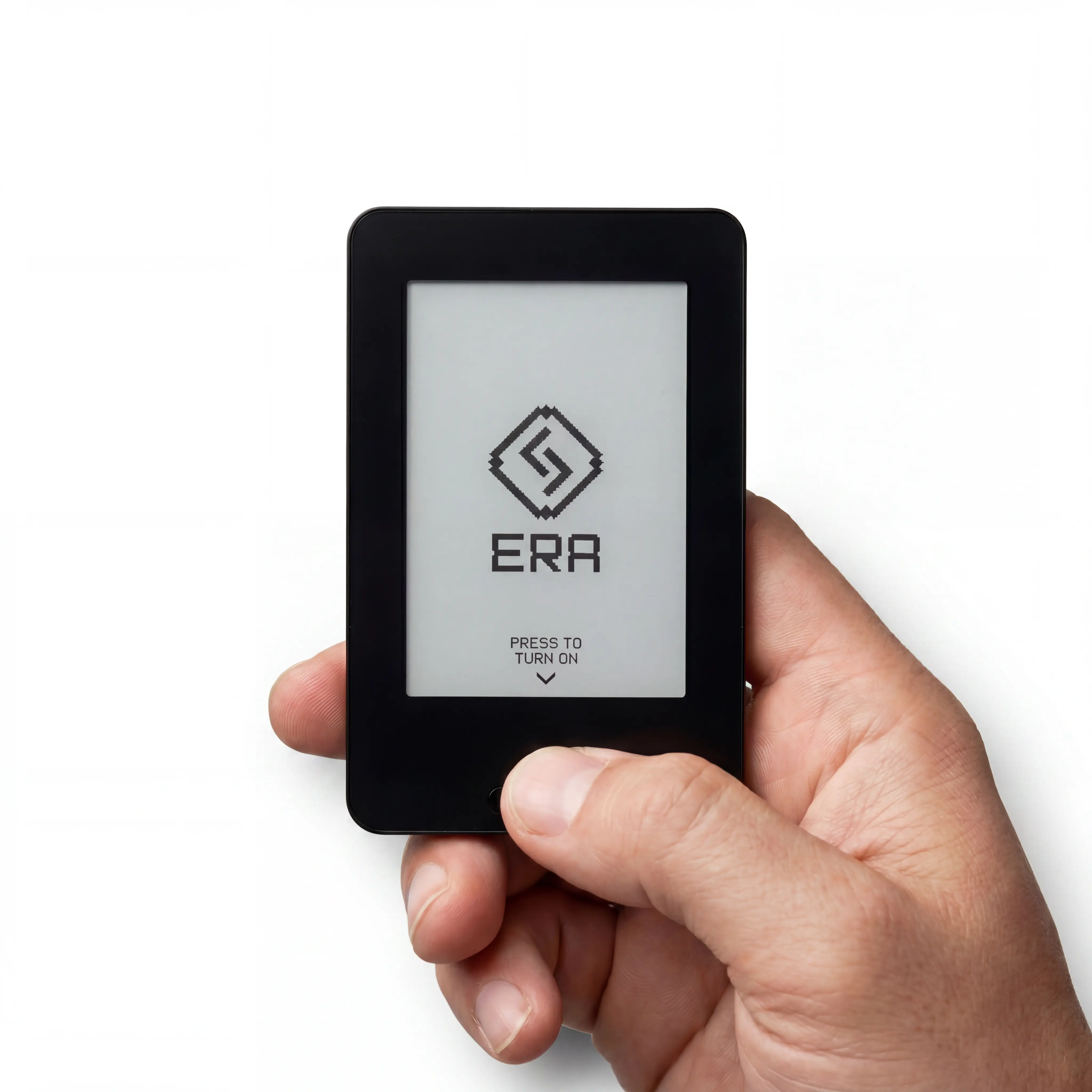
The ERA Wallet device supports four Bitcoin address types: Legacy, Nested SegWit, Native SegWit and Taproot. When connecting a software wallet, ensure that its address type and derivation settings match your original configuration.
Gap Limit: When Your Wallet Stops Looking
Even with the correct seed phrase and derivation path, a wallet may fail to discover some of your Bitcoin addresses.
The gap limit defines how many consecutive unused addresses a wallet scans before it stops looking for additional transaction history. BIP-44 specifies a gap limit of 20 for its address discovery algorithm, although individual wallet implementations may use different settings.
Consider the following example:
- Address #0 has previously received Bitcoin.
- Addresses #1 through #24 have never been used.
- Address #25 has received Bitcoin.
A wallet scanning with a gap limit of 20 may stop before reaching address #25. If your remaining funds are held exclusively at that address, the application may display a zero balance.
Check whether your software supports increasing the gap limit, extending the address discovery range or rescanning the wallet. Not every application exposes these settings.
The ability to generate additional receiving addresses on a hardware wallet does not necessarily determine how far its connected software wallet scans for transaction history.
Passphrase: The Right Seed Phrase, the Wrong Wallet
Another common complication during seed phrase recovery is the BIP-39 passphrase.
The BIP-39 standard allows an optional passphrase to be combined with a mnemonic phrase when generating the cryptographic seed. Different passphrases produce different seeds and corresponding wallets.
If your original wallet used a passphrase and you restore the mnemonic without it, you will access a different set of keys. A typo or a missing space can produce the same problem.
The wallet does not necessarily display an error because the resulting wallet is technically valid.
On the ERA Wallet device, the BIP-39 passphrase is distinct from the wallet password and device PIN. These credentials serve different purposes.
If you forget your original passphrase, the mnemonic words alone cannot reproduce the original seed.
Multiple Wallets, Accounts and Networks
Not every missing balance is related to Bitcoin address derivation. Sometimes the correct keys have been restored, but the application is displaying a different network or account.
For example, USDT exists on Ethereum, TRON and other networks. Viewing your Ethereum balance does not automatically reveal tokens held on TRON.
Some wallets also support multiple accounts under a single seed phrase. A recovery application may initially display only the first account, leaving others undiscovered.
The ERA Wallet device supports up to 10 separate wallets, each with its own seed phrase. Restoring the backup belonging to a different wallet will not reproduce the keys you are looking for.
ERA Wallet also offers Multichain and Bitcoin-only firmware. Bitcoin-only firmware does not provide access to other blockchain networks, even if the same seed can derive keys for them.
How to Recover Crypto Wallet Access Safely
Before attempting to restore wallet from seed phrase backups again, identify what differs from your original configuration.
- Check the network and transaction history. Find an old public address or transaction ID and inspect it using the appropriate blockchain explorer.
- Compare Bitcoin address types. Check whether your original and restored wallets use the same address format. Remember that an address prefix alone does not establish the complete derivation path.
- Verify the derivation path and account index. Compare the original wallet configuration with the restored account.
- Check your passphrase. Determine whether you originally used an additional BIP-39 passphrase.
- Review the address discovery range. Check whether your software allows you to extend its gap limit or rescan additional addresses.
- Verify your backup format. Shamir recovery requires compatible shares from the same backup and the required recovery threshold. An individual Shamir share is not a conventional BIP-39 seed phrase.
If another application is necessary, prefer connecting your hardware wallet without exporting its seed phrase, provided the application supports compatible integration.
For device-specific recovery, follow the ERA Wallet device restoration process. Our separate guide on how to recover a wallet using a seed phrase covers the broader recovery process.
What Not to Do During Wallet Recovery
Scammers exploit missing balances by offering services that supposedly synchronize wallets or repair derivation paths.
A blockchain explorer does not need your seed phrase to display public transaction history. Support staff do not need your secret words to investigate account configuration issues.
Be particularly cautious of fake wallet extensions designed to steal seed phrases. If you have already entered your seed phrase into a suspicious website, treat it as potentially compromised.
Rescanning addresses or changing derivation paths will not eliminate that security risk.
FAQ: Recover Crypto Wallet Access After a Zero Balance
Why Is My Bitcoin Balance Zero After Wallet Recovery?
Your wallet may be using a different derivation path, address type or account index. An insufficient address discovery range can also prevent it from finding certain transactions.
Can the Gap Limit Hide My Bitcoin Balance?
Yes. If a wallet stops scanning after a specified number of unused addresses, later addresses containing funds may remain undiscovered.
Why Does My Correct Seed Phrase Open an Empty Wallet?
The original wallet may have used a different BIP-39 passphrase, derivation path or account index.
What Is a Seed Phrase?
A seed phrase is a mnemonic representation of secret data used to derive wallet keys. Common BIP-39 mnemonic lengths include 12 and 24 words.
How to Store a Crypto Seed Phrase Safely?
Keep your backup offline and protected against unauthorized access, loss and physical damage. Never enter it into balance-checking websites or share it with support staff.
Final Thoughts
Start with your old public addresses and their blockchain history. Then compare the recovered wallet's network, derivation path, passphrase, account index and address discovery settings.
If the original addresses still hold your assets, focus on reproducing the correct wallet configuration without exposing the secrets that control your funds.
Recover the right wallet without exposing your seed phrase.
Use the code below for 20% off.