Keplr Wallet Incident: Who Really Controls Your Private Keys?
The Keplr and Web3Auth incident exposed risks in social-login wallets. Learn who controls your private keys and what it means for self-custody.


A November 2026 security incident involving Keplr and Web3Auth raises a bigger question about social login, self-custody, and who can actually authorize a crypto transaction.
Imagine setting up a crypto wallet without writing down 12 or 24 recovery words or learning how private keys work. Just click “Continue with Google.”
That is a compelling way to make crypto easier to use. But it raises a less visible question: if your wallet starts with a Google account, who ultimately controls the keys that move your funds?
What happened to Keplr?
On November 6–7, 2026, Web3Auth and Keplr disclosed a security incident affecting some Keplr wallets created with Google or Apple login. Keplr reported unauthorized transactions and said wallets created with a recovery phrase or connected hardware wallet were not affected by this incident.
Keplr subsequently attributed the exposure of some private keys to a vulnerability in Web3Auth infrastructure. The precise technical route used to compromise those keys has not yet been publicly established in a full incident report.
Web3Auth also began protective transfers from vulnerable wallets. That matters: an outgoing transaction or reduced balance does not necessarily mean an attacker stole the funds. The confirmed total of unrecoverable losses remains unclear.
This was not evidence that Google or Apple accounts themselves were breached, nor proof that every social-login wallet is unsafe. It exposed the security consequences of depending on a third-party key-management system.
Google login is not a private key
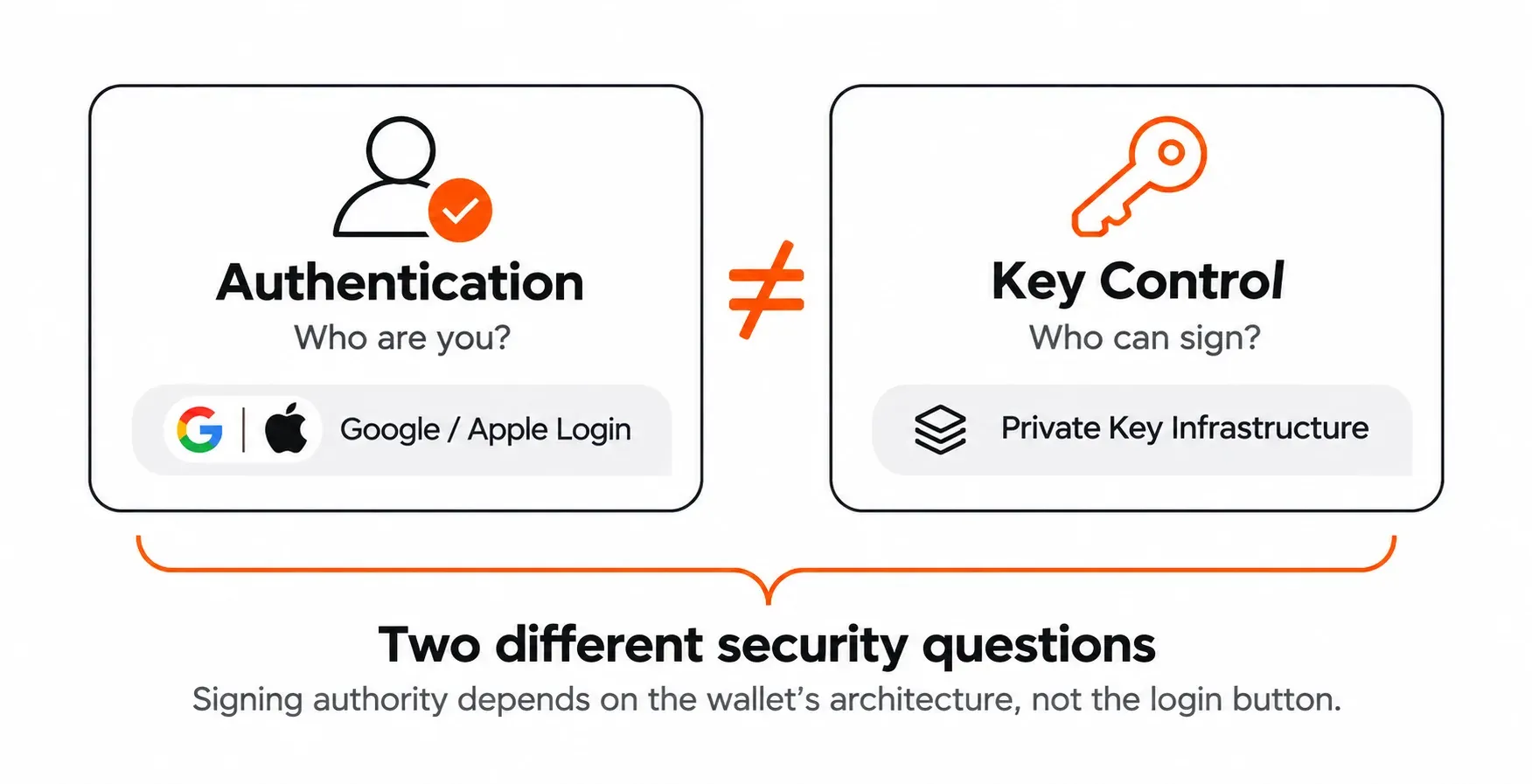
Three distinct operations can look like one seamless login:
- Authentication: checks who is trying to access an account.
- Key management: determines where cryptographic secrets live and who can use or recover them.
- Signing: uses a private key to authorize a specific blockchain transaction.
Google login authenticates a user; it does not itself sign blockchain transactions. A wallet still needs a separate key-management design, which might involve local secrets, distributed key shares, recovery services, or other components.
The crucial question is whether compromise of one provider or combination of components could make it possible to reconstruct or use a private key without the owner’s approval.
Social login is not inherently incompatible with self-custody. The answer depends on the actual implementation: which parties hold which capabilities, and whether anyone else has enough control to authorize a transfer.
Would a hardware wallet prevent this kind of risk?
A properly implemented hardware wallet separates private-key operations from the phone, browser, or service used to prepare transactions. The key stays on the dedicated device, while the connected application receives the signature rather than the secret.
Compromising an authentication server therefore should not, by itself, expose the hardware wallet’s private keys. But the separation does not eliminate every risk: a leaked recovery phrase, a malicious approval, or an overlooked transaction detail can still lead to losses.
For a closer look at this distinction, see our explainer on how crypto private keys work.
Three questions to ask about any crypto wallet
- Who can access or reconstruct the keys? Can a provider do so without you?
- What if the service is hacked or shuts down? Can you independently recover and move your assets?
- Who authorizes each transaction? Can you verify the operation before signing?
These questions reveal more than labels such as “fully non-custodial” or “bank-grade security.” They identify where trust actually sits.
What should Keplr users do?
If you created a Keplr wallet with Google or Apple login, follow official Keplr and Web3Auth updates. As of November 8, Keplr advised users not to send new funds to potentially affected accounts and to move remaining liquid assets to a new recovery-phrase or hardware-wallet account. Some balances may reflect protective recovery transfers; do not assume every outgoing transaction was theft.
Ignore unsolicited direct messages and links offering recovery assistance. Instructions should come from the projects’ verified channels, not strangers contacting affected users.
Convenience should simplify crypto, not hide trust
Crypto wallets need easier onboarding. Social login and embedded wallets can help, and they are not automatically incompatible with genuine self-custody. But removing a recovery phrase from the user interface does not remove the underlying keys or the infrastructure responsible for protecting them.
The Keplr incident is a reminder to evaluate a wallet by its trust boundaries, not its sign-in screen. A good wallet should be easy to use without requiring blind trust in how its keys are managed.
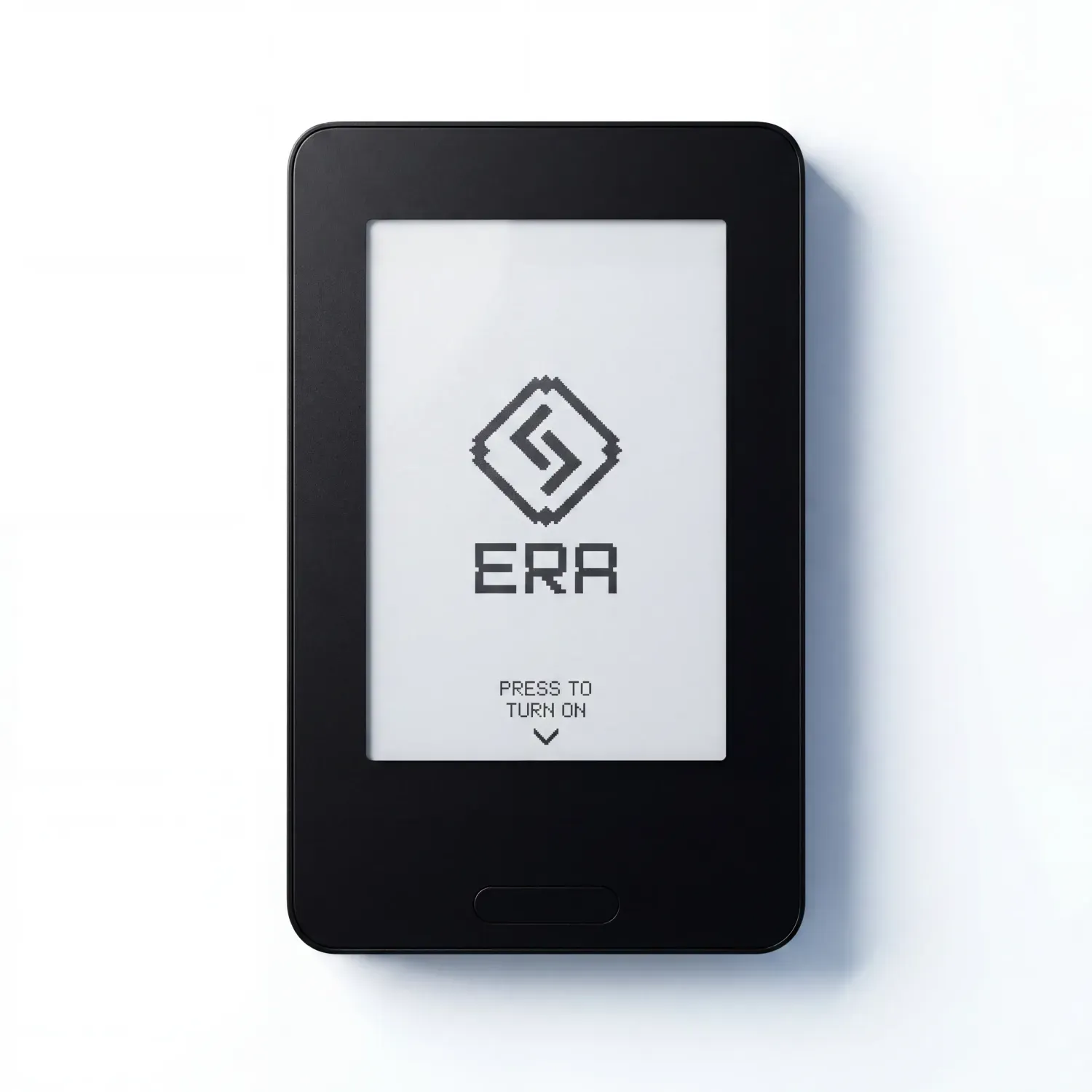
Keep your private keys separate from the services you rely on.
Code ERABLOG20 for 20% off.